

Will below-average inventories and elevated geopolitical risk lead to increased volatility during the winter heating season?
Despite concerns surrounding global economic growth, weakening manufacturing activity, and ongoing geopolitical tensions that continue to impact global crude oil and refined products markets, diesel markets remain remarkably resilient and continue to exhibit signs of tightness. Distillate inventories across key consuming regions remain below historical norms, refining capacity constraints persist, and geopolitical risks continue to threaten global supply chains. These factors have helped keep diesel crack spreads elevated and have raised concerns about fuel availability as the market looks ahead to the winter heating season later this year.
Inventory Levels Remain Below Historical Norms
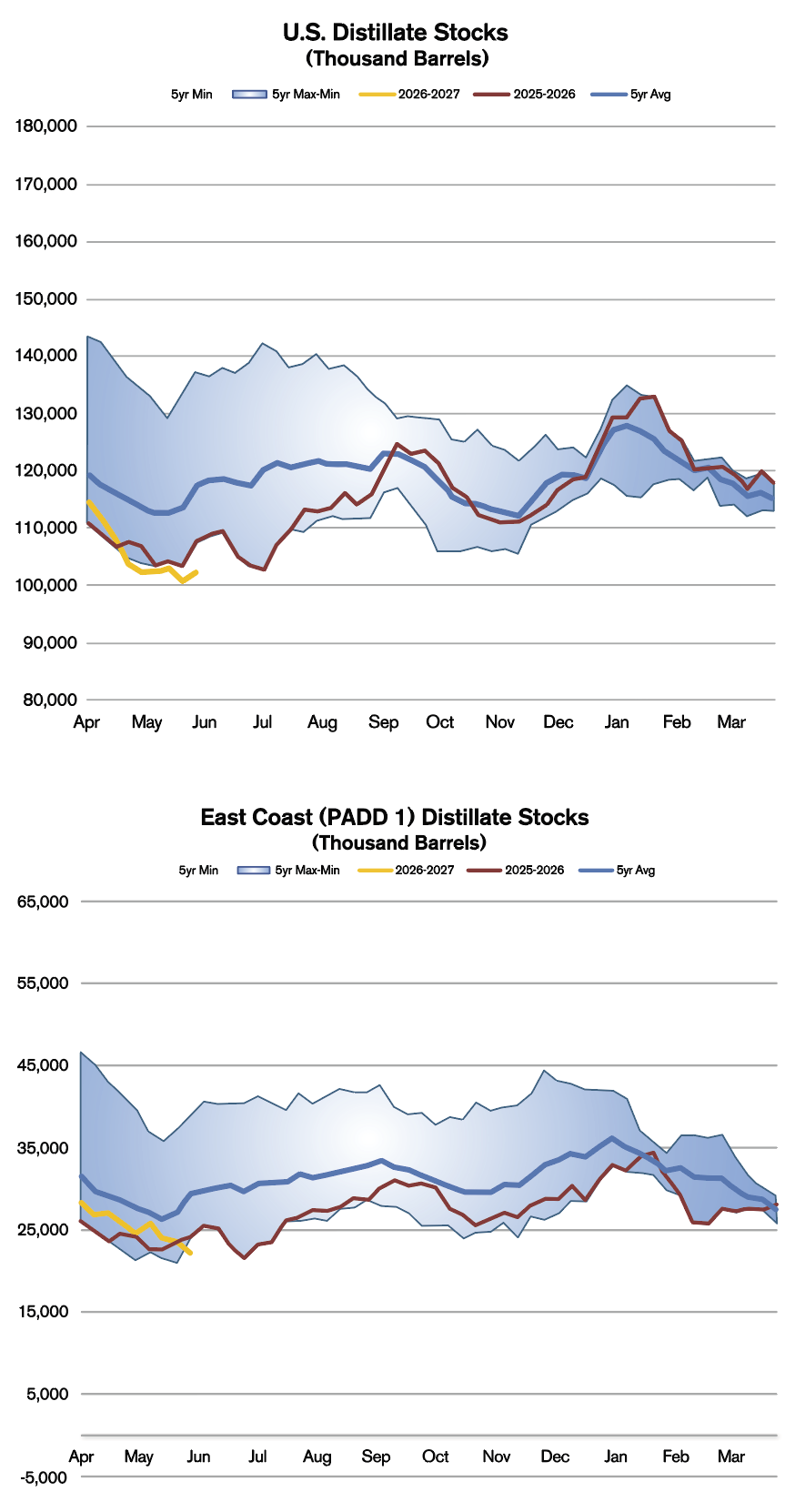
One of the most important indicators of market health is inventory levels, and in the United States, distillate stockpiles remain below historical averages, particularly on the East Coast. The region’s limited refining capacity and reliance on supplies from the Gulf Coast, as well as imports from overseas markets, leave it especially vulnerable to supply disruptions. As of May 29, US distillate inventories were 13.0 percent below the five-year average and 5.0 percent lower than a year earlier. During the same week, PADD 1 inventories were at a sharp 24.5 percent deficit to the five-year average and were 8.0 percent lower compared to the same week last year. While stock levels have improved from critically low levels seen during previous supply disruptions, they remain susceptible to weather events, refinery outages, and demand surges.
Europe is facing many of the same challenges. The loss of Russian diesel imports has altered regional trade flows, increasing its dependence on supplies from the Middle East and the US. The dependence leaves inventories exposed to disruptions in global shipping, refinery maintenance programs, and geopolitical events.
Low inventory levels mean that even minor supply disruptions can lead to significant price volatility.
Refining Capacity Constraints Continue to Limit Supply
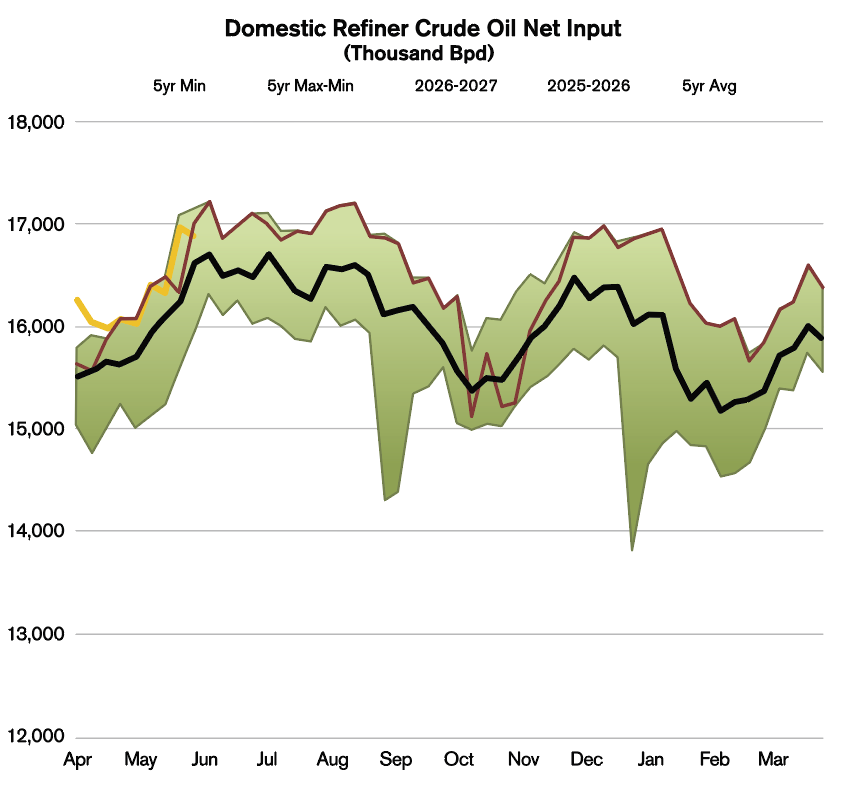
Another factor supporting diesel prices is the continued lack of global refining capacity growth relative to demand. Over the past several years, North America and Europe have collectively lost more than 2 million barrels per day (mb/d) of refining capacity due to plant closures, conversions to renewable fuels production, and economic pressures. While large-scale refineries have come online in the Middle East and Asia, much of that capacity has been designed to meet growing regional demand rather than supply international markets.
Refinery utilization rates in the US have generally remained above 90 percent during peak operating periods this year, leaving little spare capacity available to respond to unexpected supply disruptions. At the same time, refineries have increasingly optimized operations to maximize gasoline production during the summer driving season, limiting distillate output during a period when inventories would typically be rebuilt ahead of the winter heating season.
Diesel Crack Spreads Remain Elevated
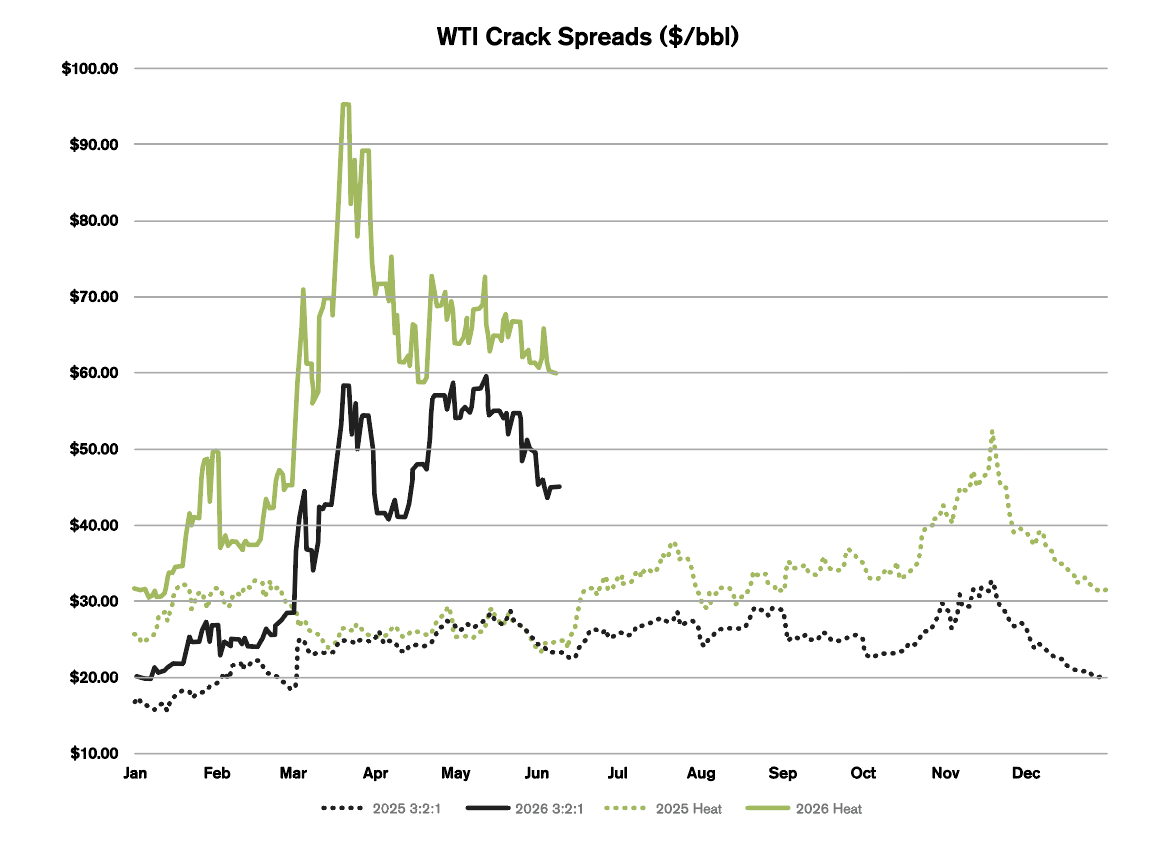
A combination of limited inventories, constrained refining capacity, and persistently strong demand has contributed to elevated diesel crack spreads. A crack spread measures the value of refined products relative to crude oil and serves as a key indicator of refinery profitability and product market tightness. Historically, diesel crack spreads have tended to normalize when economic activity slows and demand softens. However, distillate cracks have remained unusually strong in 2026, even after the winter heating season ended.
Several factors have contributed to this resilience, including below-average inventory levels, supply disruptions associated with the conflict in the Middle East, and ongoing refining capacity constraints. Strong export demand has also played a role, as US refiners continue to supply both Europe and Latin America, where local distillate inventories remain relatively tight. Even during periods of weaker crude oil prices, diesel values have frequently outperformed, reflecting a market that remains far more sensitive to supply risks.
Middle East Tensions Continue to Support Prices
Ongoing tensions in the Middle East continue to create uncertainty surrounding global energy markets. The Strait of Hormuz has been effectively shut down since March, disrupting approximately 20 percent of global crude oil supplies and forcing market participants to seek alternative supply sources and transportation routes. While the impact has been more visible in crude oil markets, the conflict has also disrupted global refined products trade flows, including diesel and jet fuel.
The conflict has highlighted the fragility of global supply chains. Should tensions persist or escalate, market participants are likely to maintain a risk premium in diesel prices, particularly given the limited inventory cushion available across major consuming regions. Any additional disruptions to production, refining operations, or transportation networks could further tighten distillate supplies and complicate efforts to rebuild inventories ahead of the winter heating season.
Looking Ahead to Winter
The next several months will be critical for the distillate market. Summer and early fall are usually considered the primary inventory-building season ahead of winter heating demand. However, with inventories already below historical averages, limited spare refining capacity, and ongoing geopolitical uncertainty, the market has little room for error.
Should refinery outages occur, geopolitical tensions persist or escalate, or colder-than-normal temperatures emerge, diesel inventories could come under renewed pressure, resulting in increased price volatility. For fuel consumers, distributors, and wholesalers, the coming months could represent an important hedging window. Historically, periods of below-average inventories and elevated geopolitical risk have often led to increased volatility during the winter heating season. Many market participants may choose to secure a portion of their winter fuel requirements through futures, options, or other structured hedging strategies before seasonal demand accelerates.
Anja Ristanovic is a Financial Analyst at risk management consultancy Hedge Solutions. She can be reached at 800-709-2949.
The information provided in this market update is general market commentary provided solely for educational and informational purposes. The information was obtained from sources believed to be reliable, but we do not guarantee its accuracy. No statement within the update should be construed as a recommendation, solicitation or offer to buy or sell any futures or options on futures or to otherwise provide investment advice. Any use of the information provided in this update is at your own risk.

