
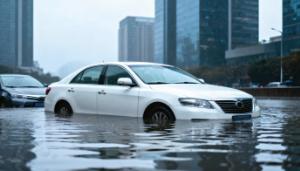
Contingency planning is often treated as a “rainy day” project – something to be tackled when the phones stop ringing. But true preparation means asking the hard questions today.
History has a way of fading into the background until it repeats itself. For those of us in the Northeast energy sector, names like the “Long Island Express” of 1938 or the Great Ice Storm of 1998 are more than just weather events; they are benchmarks of total infrastructure collapse. In 1998, a thick glaze of ice snapped power lines and crumpled transmission towers like toothpicks, leaving over three million people in the dark – some for more than three weeks. In Maine alone, 80 percent of the population lost service.
But while we often look to the “ice records” to gauge our risk, the last two decades have taught us that the threat is evolving. Between the catastrophic wind and surge of Superstorm Sandy in 2012 and the supply-chain paralysis of Winter Storm Uri in 2021, the definition of a “prepared” propane marketer has changed. If a 100-year event – be it
a mid-winter ice storm or a late-season hurricane – were to strike tomorrow, would your energy company be a lifeline for your community, or just another victim of the grid?
The Myth of Modern Resilience
In 1938, folks were hardy by necessity. Life did not stop when the lights went out because the lights were not the center of the universe. Wood stoves and gravity-fed water systems meant survival was a matter of manual labor. Even in 1998, we still had an “analog safety net.” If the power died, you could usually plug a standard corded phone into a wall jack and still get a dial tone. Communication remained open.
Today, that safety net is gone. We live in a world of VoIP, fiber-optics, and cellular dominance – all of which require a functioning power grid or a finite battery backup. During Superstorm Sandy, we saw exactly how fragile this is. When the cell towers went dark and the internet failed, the “smart” logistics we rely on vanished, leaving many marketers to manage a crisis with nothing but paper maps and local knowledge.
Hurricanes vs. Ice: A Dual Threat
We used to worry primarily about the weight of ice. Now, we must worry about the force of wind and the reach of water. Hurricanes like Sandy or even the “bomb cyclones” we have seen recently do not just take down lines; they destroy the very roads and terminals we use to move product.
When Sandy hit, it did not just knock out residential power; it shuttered 57 petroleum terminals and crippled refineries across the Northeast. Marketers who thought they were prepared found themselves in a “refueling gridlock.” Trucks were forced to travel hours away to Philadelphia or Delaware harbors just to find an open rack, with wait times at those few operational terminals stretched for hours. If a major hurricane hits the Northeast again, your inventory is not just what is in your bulk plant – it is whatever you can realistically reach through a broken logistics chain.
The Generator Paradox and the “Uri” Lesson
Since the early 2000s, the Northeast has seen a massive surge in residential propane standby generators. While this has been a boon for sales, it creates a massive operational vulnerability. Most residential customers have storage – typically a 500-gallon tank or less – that may only last a few days under the heavy load of a whole-home generator and a furnace running 24/7 in sub-zero temperatures.
Winter Storm Uri in 2021 provided a chilling preview of what happens when the grid fails on a massive scale. In Texas, the sheer demand for fuel to keep generators and heating systems running, coupled with a collapse in production and transportation, created a lethal scenario. In a 30-day outage in the Northeast, your generator customers will be calling simultaneously, desperate for a fill. If the roads are impassable due to ice or downed trees, and your “smart” tank monitors are offline because the local cell tower’s backup generator ran out of fuel, you are flying blind. You are not just managing a delivery schedule; you are managing a catastrophe.
Infrastructure: Physician, Heal Thyself
We often focus so much on the customer’s home that we forget to audit our own backyard. Your bulk plant is the heart of your operation, but if the grid goes down, does that heart keep beating?
- Bulk Plant Power: Does your plant have a dedicated, tested backup power source? If you cannot run the pumps to load your bobtails, your inventory is trapped in the tanks, useless to the community.
- Self-Loading & Manual Operation: In a worst-case scenario where automated systems fail, do your trucks and plants have a way to self-load or operate via manual bypass?
- The Office “Blackout”: If your office relies on a cloud-based dispatch system and the internet goes down, what is your fallback? During Sandy, some companies were reduced to taking orders on handwritten pads and routing by memory.
The Digital Fog
The most overlooked risk in modern distribution is our total reliance on the cellular network. We use it for GPS routing, real-time tank monitoring, and driver communication. But cell towers are infrastructure, too – and they rely on backup generators that eventually run dry.
When the towers go dark, the “smart” operation suddenly becomes an “analog” one. If you have not practiced how to dispatch, route, and track inventory without a digital dashboard, the middle of a 100-year storm is not the time to start the training.
Don’t Wait for the Ice to Freeze
Contingency planning is often treated as a “rainy day” project – something to be tackled when the phones stop ringing.
But in our industry, when the phones
stop ringing during a storm, it usually means the lines are down, not that the problem is solved.
True preparation means asking the hard questions today:
- Do we have a priority list for “critical life-safety” generator customers?
- Is our own backup power tested under a full load, and do we have enough fuel on-site to run our plant for 14 days?
- Do we have a communication “Plan B” (such as satellite or two-way radio) for when the digital world goes dark?
We are in the business of keeping the heat on and the lights burning. To be the hero in a 100-year event, you have to ensure your own house is built on a foundation that does not plug into a wall. The next major event is not a matter of “if” – it is a matter of “when.” Will you be ready?
Scott Gaudet covers inside sales and tech support for Bergquist. He has over 4 decades of experience in the propane industry. He can be reached at scott.gaudet@bergquistinc.com.

