

It will come as no surprise that the most recent “Short Term Energy Outlook” released by the Energy Information Administration (EIA), is forecasting high heating oil prices for the upcoming winter.
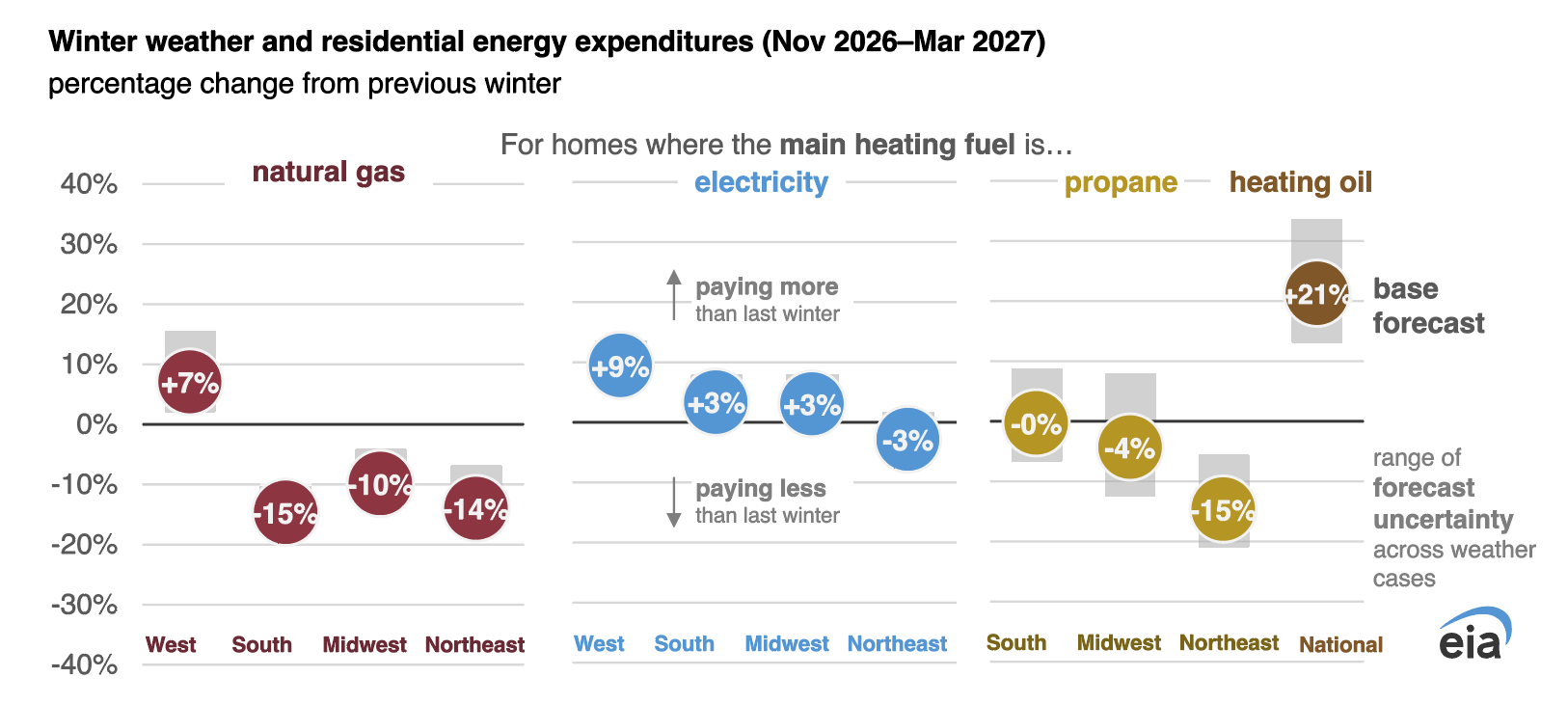
Unfortunately, the prediction is for a 21 percent increase for homes using heating oil, while costs for natural gas, electricity, and propane are all expected to be lower this winter than last.
In the October 7 Heating Oil Update, the EIA recorded national heating oil prices at $6.042 per gallon, and East Coast (PADD 1) prices at $6.055, both $2.49 above their respective prices for the first week in October in 2025. Wholesale prices were comparable, at $5.025 nationally and $5.027 for PADD 1, and $2.65 per gallon more than last year.
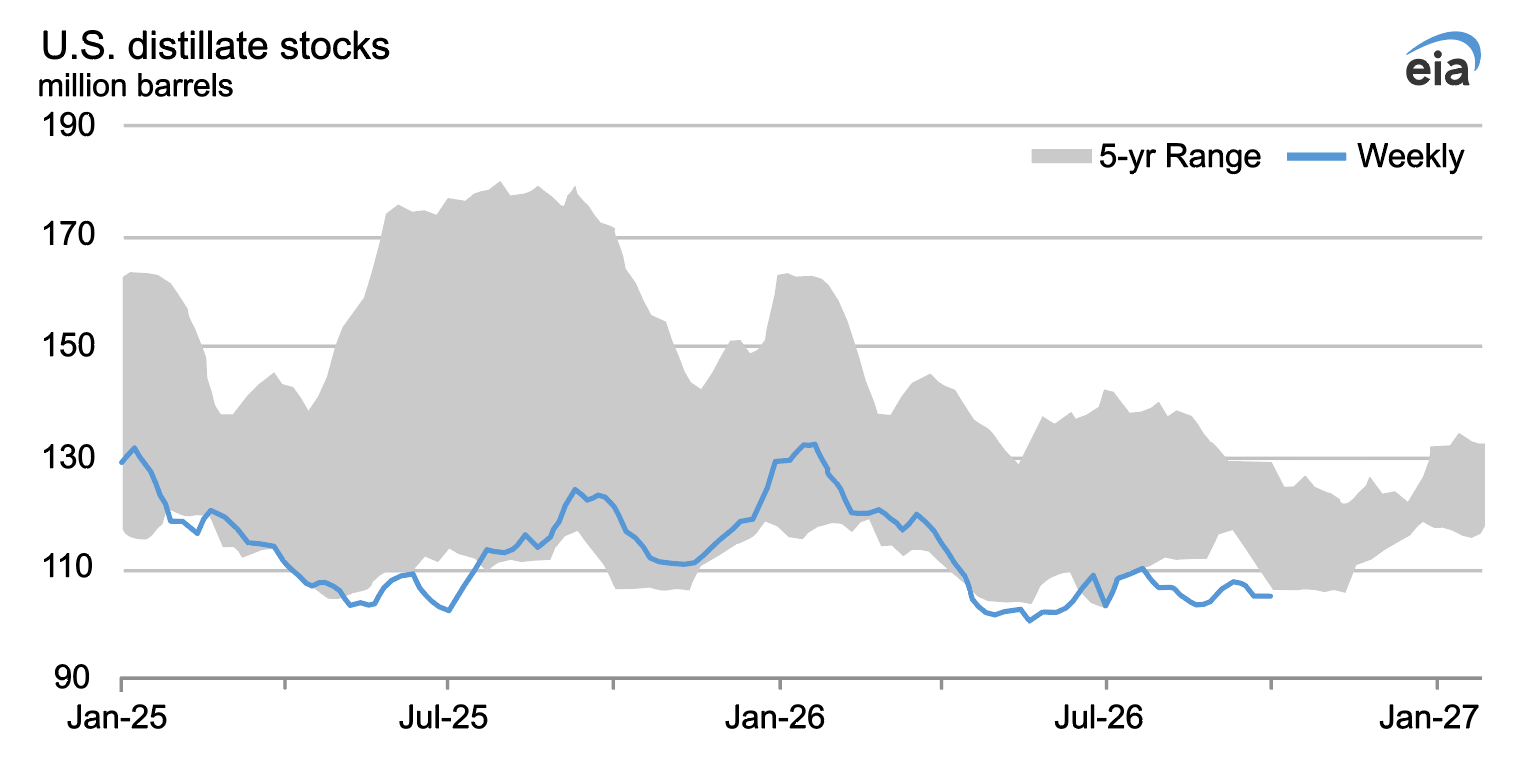
Distillate supply is currently 16 million barrels lower than last year, and has been approximately 20 percent lower than the 5-year range since March 2026.
The STEO actually anticipates a 34 percent increase in heating oil costs, which is expected to be offset by warmer temperatures.
Costs for homes heated with natural gas or propane are expected to be lower than last year across most of the country. The Western region is forecast to suffer a colder winter and have higher energy costs. Homes that heat with electricity should anticipate a 3-4 percent increase in consumption and energy bills.
The report anticipates lower prices for retail gasoline and diesel, with diesel prices dropping from $6.29 in late September to $4.50/gallon in 2027, and gasoline to decrease from $4.35 to $3.60.
Supply: Global Transport Eases in 2027
“Global distillate fuel production, which includes heating oil production, has dropped because of reduced global refining activity. Lower production has caused rising international prices, driving up both the cost to import distillate to the United States and the demand for distillate exports from the United States. Through the first seven months of 2026, U.S. distillate exports increased 20 percent over the same period last year, with much of the increased volumes sent to Europe.”
“With more costly U.S. imports and higher demand for U.S. exports, U.S. distillate fuel stocks are low heading into winter. We expect inventories will be about 11 percent below the five-year average in the fourth quarter of 2026.”
“Although we assume that oil flows from the Middle East will remain constrained through the fourth quarter of 2026 (4Q26), we estimate that regional shut-in production in September was the lowest since the onset of hostilities. Despite ongoing constraints, we assume that a combination of convoys through the Strait of Hormuz and workarounds to oil exports from the Middle East, including bypass routes and increased use of ship-to-ship transfers, will lead to production and exports from the region generally increasing through the forecast period.”
As it has in the past, the EIA notes that retail prices for heating oil and propane are more closely tied to the wholesale cost, because of the differences in regulations and purchasing cycles to natural gas and electricity.
They also broke down annual household energy expenditures to compare space heating and other end uses.
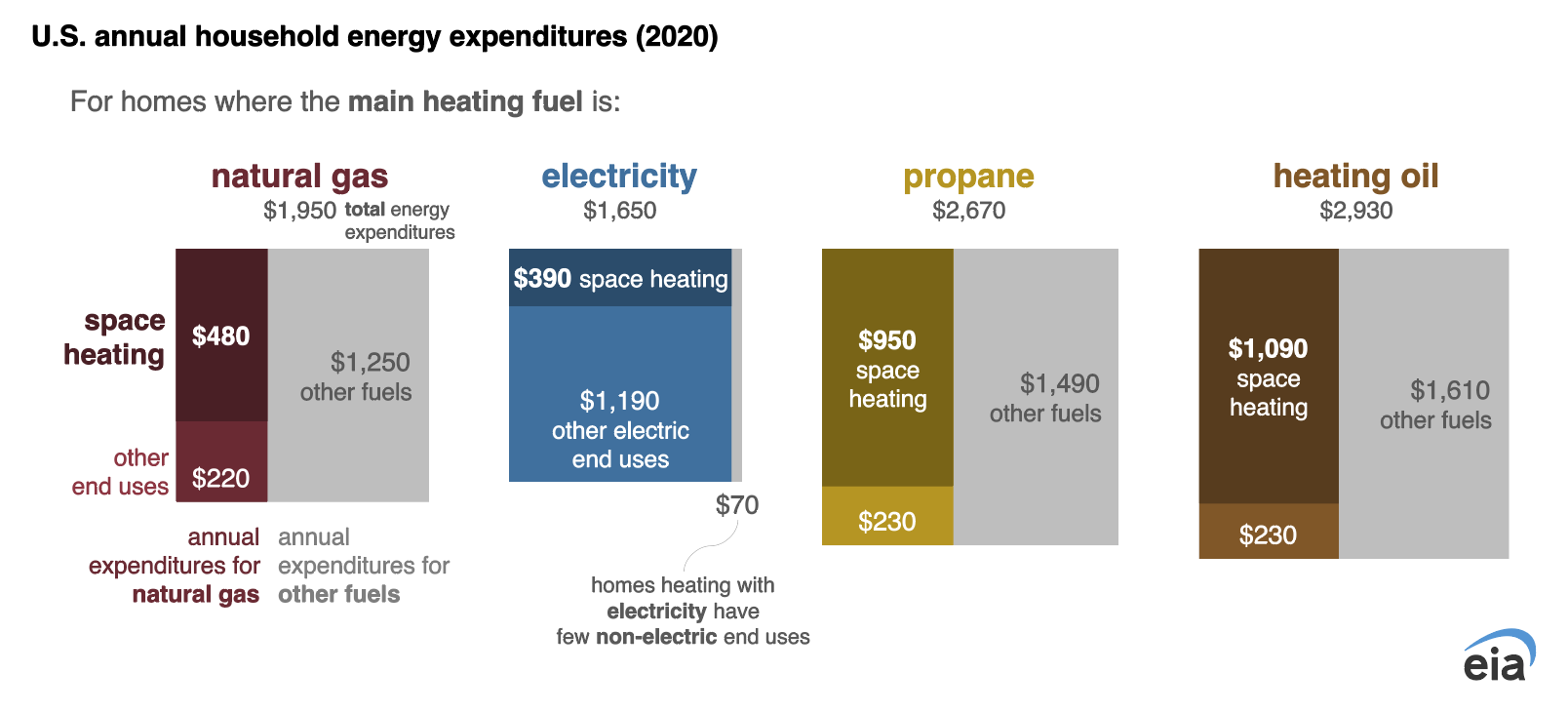 Space heating was calculated based on historical Residential Energy Consumption per degree day, according to the number of forecasted heating degree days in each month for the season. Many households use multiple heating equipment and fuels, including secondary sources such as fireplace and portable heaters. In situations where the fuel for secondary heating equipment is the same fuel used for main space heating, the EIA estimates include both main and secondary heating. When the secondary fuel is different from the main fuel, the estimates only include consumption and expenditures for the main heating fuel.
Fuel consumption not associated with heating was also estimated. This includes homes using natural gas for heating but also for water heating, cooking and clothes drying. For most fuels, the estimates are based on annual values converted to per-day rates. For electricity, the EIA subtracted air conditioning from the total, and then used the remaining estimates to determine the per-day usage.

