
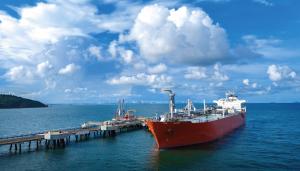
With the continued closure of the Strait of Hormuz, the Trump Administration has taken several steps to attempt to stabilize supply and price issues.
As the conflict in Iran continues to drive volatility across global energy markets, federal and international policymakers have moved on several fronts to stabilize supply and ease price pressures. When this issue went to press, the EIA was reporting wholesale heating oil at $4.229 per gallon, $1.382 more than its price before the incursion, and a $1.88 more than the year before. Over the previous three days recorded, Brent Crude had fluctuated between $101.04 and $103.23 per barrel and WTI between $93.39 and $9.48 per barrel, compared to $71.93 and $67.84, respectively, in mid-March 2025.
NEFI has been actively monitoring the situation and providing important information to members. The following includes information from recent Regulatory Alerts, NEON newsletters, and webinars.
Please note: The issues and policies regarding the conflict in Iran and fuel markets are exceptionally dynamic at this time. The conflict may be over by the time this issue reaches our readers, or it may have expanded in scope. This information was current as of publication.
Jones Act Waiver
The President issued a partial 60-day waiver of the Jones Act, removing the requirement that ships traveling between U.S. ports had to be domestically manufactured, owned by Americans, and primarily crewed by Americans. This waiver was extended to vessels transporting fuel oil, propane, natural gas, crude oil, kerosene, coal, motor fuel, fluids, and many other products. The list of “potentially covered products” issued by the Department of Homeland Security, U.S. Customs and Border Protection included 660 line items by Harmonized Tariff Schedule (HTS) numbers. (Read more about the Jones Act in this issue’s Front Burner on page 3.)
Defense Production Act
The administration invoked the Defense Production Act to override California’s regulation and allow Sable Offshore Corp. to restart oil production operations off the state’s coast. The Sable facilities have been closed since an oil spill occurred in 2015.
Global Oil Reserve Release
More than 30 nations agreed to release a combined 400 million barrels from strategic reserves in a coordinated International Energy Agency (IEA) effort. The United States committed to contributing 172 million barrels, or 47 percent of the total allotment, over 120 days (approximately 1.5 million barrels per day). The global total rose to 426 committed volumes within a few days of the announcement, led by the U.S., Japan, and Canada. At present, 301 million barrels of oil and 125 million barrels of oil products had been committed. Thie IEA represents 1.2 billion barrels of governmental reserves and an additional 600 million industry-held barrels under government obligation.
Temporary Sanctions Relief
The Trump administration has granted a 30-day waiver for the purchase, delivery, and sale of Russian-origin crude oil and petroleum products. The waiver applies only to oil that was already loaded on vessels on or before March 12 of this year, which is estimated to be approximately 100 million barrels.
A waiver was also issued to sanctions on trades with Venezuela’s state oil company PDVSA that were imposed during the first Trump administration.
Additional Troops Deployed
Marine Expeditionary Units were deployed on March 20, adding between 2,500 and 5,000 Marines and thousands of sailors and Navy personnel to the 50,000 troops already stationed in the region.
OPEC+ Increases
OPEC+, the eight oil producing countries of Saudi Arabia, Russia, Iraq, the United Arab Emirates, Kuwait, Kazakhstan, Algeria, and Oman, has announced that they would collectively increase oil production by 206,000 barrels a day in April in an attempt to mitigate the price impacts of the Middle East conflict.
Other Considered or Potential Responses
International Deployment to the Strait of Hormuz
President Trump has called on allied nations to send naval assets to help reopen the Strait of Hormuz, through which roughly 25 percent of the world’s seaborne oil supply normally passes.
In a joint statement, the leaders of the United Kingdom, France, Germany, Italy, the Netherlands, Japan, Canada, Republic of Korea, New Zealand, Denmark, Latvia, Slovenia, Estonia, Norway, Sweden, Finland, Czechia, Romania, Bahrain, and Lithuania condemned Iran’s attacks on unarmed commercial vessels and civilian infrastructure and the “de facto closure of the Strait of Hormuz.” While these countries did not offer to immediately send troops to the region, the statement included the following:
“We emphasise [sic] that such interference with international shipping and the disruption of global energy supply chains constitute a threat to international peace and security. In this regard, we call for an immediate comprehensive moratorium on attacks on civilian infrastructure, including oil and gas installations.
We express our readiness to contribute to appropriate efforts to ensure safe passage through the Strait. We welcome the commitment of nations who are engaging in preparatory planning.
The U.S. Navy, noting the extreme danger, has yet to commit to escorting vessels through the Strait, noting the danger to its vessels and personnel. Multiple analysts have added that an escort would require air power in addition to warships to address air and sea drones, and that the narrowness of the Strait would make it difficult, if not impossible, for the destroyers to get into position to respond to any threats, assuming they had enough time to do so.
Export Restrictions on U.S. Crude Oil and Refined Products
After a meeting with members of the American Petroleum Institute (API) on March 19, Energy Secretary Wright announced that the president was not considering a ban on oil and gas exports. The API had opposed such a ban, arguing it could drive up gasoline prices for American consumers and further destabilize the global energy market.
Federal Excise Tax Holiday on Motor Fuels
Senator Mark Kelly (D-AZ) and Representative Chris Pappas (D-NH) have introduced legislation that would temporarily suspend the federal motor fuels excise tax of 18.4 cents per gallon. The measure could also emerge as part of a war supplemental reconciliation package currently under discussion in Congress.
NEFI continues to track all developments and their implications, and we will continue to share as much information as possible. For questions or more information, contact NEFI President and CEO Jim Collura at jim.collura@nefi.com.

