
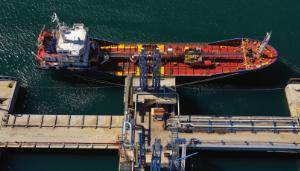
A timeline of the drawdown of crude oil from the SPR, and what it all means.
Since February 28, 2026, when the United States and Israel became engaged in a conflict with Iran and its regional allies, the war’s economic impact has included the largest supply disruption in the history of the global oil market. Petroleum shipments were impeded by Iran’s closure of the Strait of Hormuz, through which around 20 percent of the world’s oil trade passes, as well as by Israeli and Iranian attacks on energy facilities. This disruption has led to global oil prices rising and has caused fuel shortages in countries which imported most of their fuel from the Persian Gulf region, and has led to panic buying in much of the world.
There has been one critical tool, however, that has aided in mitigating these massive disruptions to global energy supplies during the conflict with Iran: the Strategic Petroleum Reserve (SPR). The SPR is the world’s largest emergency supply of crude oil, maintained by the U.S. federal government in massive underground salt caverns along the Texas and Louisiana coasts. Established in 1975 following the 1970s Arab oil embargo, its primary purpose is to buffer the global economy and domestic consumers against catastrophic supply shocks and severe price spikes. In essence, the SPR is a national insurance policy against foreign supply disruptions.
Since the Iran conflict began, there have been several SPR release “swaps.” Under these types of emergency exchanges, oil is loaned to refiners and companies to stabilize markets and must be returned at a later date with an 18 percent to 22 percent premium (extra barrels) to increase total reserve capacity.
Here is a look back—and forward—on these swaps:
February 28 – March 6: The Strait of Hormuz Closes
Within days of the first United States and Israeli strikes, Iran effectively closed the Strait of Hormuz, effectively shutting off transport of crude oil, petroleum products, fertilizer, and more. In comments made during the first week of the conflict, President Trump and members of his Cabinet insisted that there was no need to release any products from the SPR.
March 11: The United States Announces the Release 172 Million Barrels of Oil from the Strategic Petroleum Reserve
President Trump reversed course after being persuaded by advisers that market intervention was necessary, announcing the release of 172 million barrels from the SPR over 120 days. This release would be part of a broader pledge by 30 nations, as coordinated by the International Energy Agency (IEA), to inject 400 million barrels of oil into global markets—the largest reserve release in the organization’s history.
March 13: The DOE Issues a Request for Proposal for 86 Million Barrels
The U.S. Department of Energy issued a Request for Proposal (RFP) for a crude oil exchange from the Strategic Petroleum Reserve for 86 million barrels of crude oil as part of the 172-million-barrel exchange announced on March 11. Under the terms of the exchange, companies were to return the borrowed oil to DOE with additional barrels as a premium, strengthening the SPR while stabilizing markets at no cost to American taxpayers.
March 20: The First Oil Shipment Begins
The DOE announced the award of contracts for the initial phase of the Strategic Petroleum Reserve Emergency Exchange and the first oil shipments of the United States’ 172-million-barrel release began. Under these initial awards, DOE moved forward with an exchange of 45.2 million barrels of crude oil, to receive 55 million barrels in return.
April 1: The DOE Initiates Additional SPR Emergency Exchange
The DOE issued an RFP for an emergency exchange of 10 million barrels from the Strategic Petroleum Reserve, as the United States continued to deliver on its 172-million-barrel release commitment. This action expanded upon the initial phase of the Emergency Exchange, which moved quickly to award 45.2 million barrels from SPR sites. The 10-million-barrel exchange leveraged the full capabilities of the SPR to accelerate critical near-term oil flows into the market. The release occurred as President Trump announce the three-month limited waiver of the Jones Act, which allows foreign-flagged, foreign-built, or foreign-crewed vessels to legally transport SPR oil between domestic U.S. ports without penalty.
April 9: The DOE Issues an RFP for an Additional Emergency Exchange of up to 30 Million Barrels
Under the DOE’s exchange authority, participating companies would be required to return the borrowed 30-million barrels with additional premium barrels by next year.
April 10: Contracts Are Awarded for 8.5 Million Barrels from SPR in Second Phase of Emergency Exchange
The exchange continued to allow bidders to take advantage the President’s limited Jones Act waiver.
April 16: Secretary Chris Wright Faces the House of Representatives
During a House Energy Committee hearing, Rep. Randy Weber (R-TX) asked Energy Secretary Chris Wright about sales of oil from the Strategic Petroleum Reserve. Weber specifically asked, “How much oil has been sold to date?’” focusing on the impact of drawdown efforts on domestic supply. Wright defended the DOE’s actions structured as “swaps,” which aim to return an increased volume of oil (e.g., 1.25 barrels for every 1 released) to the reserve. The hearing reflected broader congressional concerns about balancing emergency energy releases with long-term energy security.
April 17: The Swaps Continue
The DOE’s Hydrocarbons and Geothermal Energy Office (HGEO) announced awards of contracts to exchange 26 million barrels of crude oil from the SPR, marking the next phase of the DOE’s execution of the United States’ 172-million-barrel contribution to the International Energy Agency’s collective action to stabilize global oil supply.
April 30: DOE Delivers Another Request for Proposal Execution
The DOE issued an RFP for an emergency exchange of up to 92.5-million-barrels of crude oil from the SPR. Participating companies will return the borrowed 92.5-million-barrels of crude with additional premium barrels, ensuring the SPR grows beyond current levels while delivering immediate supply to refiners and global oil markets.
May 12: DOE Awards Exchange 53.3 Million Barrels of Crude
The DOE announced the contract awards for the exchange of approximately 53.3 million barrels of crude from the SPR. The announcement noted that this exchange is part of a “record-speed series of SPR exchange solicitations—the largest in the Reserve’s 50-year history.” To date, approximately 35 million barrels have been delivered to the market.
Future Goals and Challenges
Officials aim to ensure the SPR holds more oil by the end of the repayment cycle than it did prior to the initial drawdown. Future SPR strategy heavily banks on market backwardation—a condition where prompt, present-day crude prices are higher than future or “forward” prices. The DOE capitalizes on this by selling current high-priced barrels today while it simultaneously contracting to buy back large volumes of oil at lower “forward” prices for delivery in 2027.
Despite long-term goals to rebuild reserves right to the top, the path forward faces a number of challenges:
- Logistical Congestion: Swapping and replacing millions of barrels involves highly complex logistics. Refineries and midstream operators must manage significant turnaround times and large-scale delivery requirements.
- Budget Realities: Buying back massive volumes of crude during prolonged periods of elevated geopolitical tension requires massive capital. It is financially challenging for the government to aggressively rebuild stockpiles if spot market prices remain high.
- Structural Instability: Rapid depletion and slow refilling cycles have led to questions among analysts regarding the integrity of the salt caverns that house the reserves.
The closure of the Strait of Hormuz has reduced tanker traffic to just 10 percent of pre-conflict levels. The strait normally carries about 25 percent of global seaborne oil trade and about 20 percent of total global oil and petroleum product consumption. No reserve release can replace a disruption of this magnitude on its own.
In addition, the 400-million-barrel coordinated IEA release represents roughly four days of global oil consumption. Meanwhile, an estimated 11–16 million barrels of daily supply from the Persian Gulf has been disrupted. What’s more, the oil industry relies on specific crude blends. A disruption to Middle Eastern sour crude cannot simply be replaced barrel-for-barrel with domestic light sweet crude. The price impact from a supply disruption like this can mean more than just a uniform increase across all oil.
While the Strategic Petroleum Reserve cannot fully replace the millions of barrels lost daily from regional blockages, the only real solution is reopening the Strait of Hormuz. After all is said and done – and swapped – the SPR can only serve as a bridge and not a substitute for restored supply.
Analysts speculate that the SPR’s exchanges will continue until either global supply bottlenecks are resolved or SPR levels reach critically mandated minimums. Some estimates project these drawdowns could last into late 2026 or February 2027 at current rates. In the meantime, emergency releases have kept energy flowing, providing time for the market to adjust, and preventing runaway fuel costs from crippling the economy.
This information was accurate as the time of publication. Please utilize your own resources for the most current information.

