
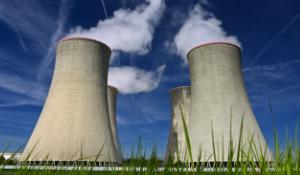
The DOE sets ambitious nuclear energy targets.
In March, the U.S. Department of Energy (DOE) launched the Utility Power Reactor Incremental Scaling Effort (UPRISE) initiative to rapidly expand domestic nuclear energy capacity. The goal of the initiative is to add 2.5 GW of additional nuclear capacity by 2027 and a total of 5 GW by 2029.
UPRISE focuses on maximizing existing nuclear infrastructure to meet surging power demand. The DOE is providing up to 80 percent financing for eligible project costs, with over $289 billion in available loans.
Key Focus Areas
- Power Uprates – Increasing the power output of currently operating reactors.
- Restarts – Bringing dormant nuclear facilities back online. Three Mile Island and Palisades are good examples.
- Life Extensions – Supporting license renewals to prevent the closure of existing reactors.
- Supply Chains – Strengthening domestic supply chains for both uprating existing plants and future reactor builds.
Key Challenges and Risks
- Despite the high potential for cost-effective capacity increases, the initiative faces significant hurdles.
- Although UPRISE has streamlined processes, projects still require extensive Nuclear Regulatory Commission (NRC) review. That could take 12 months or more for approval.
- Upgrading plants requires specific equipment like turbines, generators, and advanced fuel technologies could cause production bottlenecks.
- The initiative requires a skilled, specialized workforce to manage complex upgrades and operate reactivated plants.
While DOE offers financing, competitive market conditions could make some projects less viable. Similarly, restarting plants like Palisades requires overcoming massive, stalled project costs.
Safety concerns associated with nuclear energy, particularly surrounding the restart of long-closed plants, could face local opposition, influencing regulatory timelines. Connecting increased power from existing sites necessitates adequate transmission infrastructure, requiring coordination with broader grid upgrades.
The initiative aims to address these challenges by hosting stakeholder workshops to bridge the gap between nuclear owners, end-users (such as technology firms), and suppliers.
SMRs and Test Reactors
The DOE is currently managing two distinct funding tracks to catalyze the deployment of small modular reactors (SMRs). They significantly increased financial support to de-risk the first wave of commercial SMRs.
For Small Modular Reactors, reaching first criticality has been called the “Hello World” moment. It proves that the design works in the real world, not just on a computer. It also proves the fuel arrangement is correct. Finally, it proves the safety systems can successfully manage and “brake” the reaction.
Criticality is the “steady state” or “on” position of a nuclear reactor. When a startup says they will reach criticality, they are essentially saying they will have their reactor built, fueled, and running for the first time.
DOE Grants Aand Loans
Re-issued in March 2025, this $900 million solicitation is designed to support “first-mover utility teams and fast-follower projects.” Beyond direct grants, DOE has over $289 billion in loans available to back nuclear projects.
In late 2025, the DOE awarded $400 million each to the Tennessee Valley Authority and Holtec International to accelerate the deployment of the nation’s first commercial light-water SMRs.
At the moment, it looks like the GE-Hitachi’s SMR could be the only commercial SMR project in operation in this decade. They anticipate operations at its first unit by late 2029.
There are a handful of large-scale commercial SMR projects targeting commercial operations in the early 2030’s.
The Reactor Pilot Program
The Reactor Pilot Program, established by Executive Order in May 2025, is a fast-track initiative designed to bypass traditional Nuclear Regulatory Commission licensing for test reactors. Instead, the DOE uses its own authority under the Atomic Energy Act to authorize these designs, with the goal of reaching criticality for at least three reactors by July 4, 2026.
Valar Atomics claimed criticality as early as November 2025. Oklo is expected to reach criticality with its Groves Isotopes Test Reactor in Texas by the July 2026 deadline.
Key Program Features
- DOE Authorization – Participating reactors bypass the NRC entirely for the testing phase, though designs can be fast-tracked for future NRC commercial licensing.
- Concierge Teams – Selected companies are assigned specialized DOE teams to expedite paperwork and regulatory reviews from weeks to days.
- Prototyping Focus – The program fills the “innovation gap” by allowing companies to build and break prototypes to gather data before attempting full-scale manufacturing.
- Self-Financed – Unlike other DOE programs, applicants are responsible for all costs associated with design, construction, and decommissioning.
Major Risks and Criticisms
There are challenges. Many experts remain skeptical of this aggressive timeline for most participants due to manufacturing lead times for nuclear-grade components.
Critics and former NRC chairs warn that bypassing independent oversight could erode public trust and lead to future legal challenges.
The program has drawn fire for removing the “ALARA” (As Low As Reasonably Achievable) principle for radiation exposure, shifting to a less stringent compliance framework.
Some experts argue that the “July 4, 2026” deadline is politically motivated and may force haphazard, “rushed” safety reviews.
Ed and Kelly Burke are respectively Chairman of the Board and Senior Marketing Manager at fuel distributor Dennis K. Burke Inc. They can be reached at 617-884-7800 or ed.burke@burkeoil.com and kelly.burke@burkeoil.com.

