
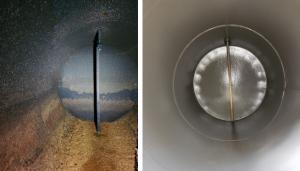
If you own older fuel storage tanks, there is a hard question worth asking now, not later: what is happening inside them?
For years, many owners saw no obvious warning signs. Then came the slow, expensive symptoms – filter clogging, sludge, unusual debris, seepage, repeated service calls, corrosion, downtime, lost product, and in some cases releases and regulatory headaches. By the time the problem is visible from the surface, the damage inside the tank may already be advanced.
The shift in fuel chemistry occurred as ultra-low sulfur diesel began replacing low sulfur diesel in 2006 and was phased in over the following years. Around that same period, ethanol became more common in gasoline and biodiesel blending increased in diesel and heating fuels. Those changes helped reduce emissions, but they also changed storage conditions inside tank systems. Industry and government research has since pointed to a mix of factors – including water, contamination, changed fuel chemistry, and microbial activity – that can accelerate corrosion, sludge formation, and component failure, especially in older tanks and older equipment.
What are your options for damaged tanks?
- Shut the site down, excavate, remove the old tank, and install a new one. While often necessary, it also involves a major cost, open excavation, lost sales, and weeks – or longer – of operational headaches while the tank is out of service.
- Ignore the problem and hope it does not get worse. That is usually the most expensive path of all, as small warning signs turn into emergency calls, failed inspections, environmental losses, and forced decisions made under pressure.
- Have the tank professionally inspected, tested, and evaluated to see whether it is a candidate for lining instead of replacement.
What is tank lining?
WCC Tank Technology is one of the few established companies that specialize in this work, and has been lining tanks for decades. The company lines diesel, gasoline, and oil tanks, single-wall or double-wall, steel or fiberglass, aboveground or underground. The lining system is designed for compatibility with today’s fuels, including biodiesel blends, detergent packages, and other modern additives that older tanks were never originally designed around.
If the tank is a good candidate, the company can install a protective lining that creates a barrier between the fuel and the original tank material, preventing the fuel from directly contacting the underlying steel or fiberglass surface while also extending useful tank life.
Why line your tanks:
For owners, the advantages add up.
- In many cases, lining costs a fraction of what full tank replacement would cost.
- WCC provides a written 10-year warranty with tank lining
- In the right situation, the excavation area can be as small as roughly 4 feet by 4 feet
- The tank is usually returned to service in about a week.
- Less lost revenue, less liability, less customer disruption, and a much more manageable project.
If your tanks are older, out of warranty, or showing warning signs, lining may be a legitimate, cost-saving alternative worth investigating before a small problem becomes a major one. WCC recommends that owners start evaluating tanks well before failure, as early as 15 to 20 years after installation, depending on the tank, product stored, and operating conditions. Waiting until you have seepage, severe corrosion, or a release usually means you will need to make decisions under the worst possible circumstances.
Your tanks may be buried. Your head should not be.
For more information, go to www.wcctank.com and then call (845) 564-9555 to schedule your free estimate.

